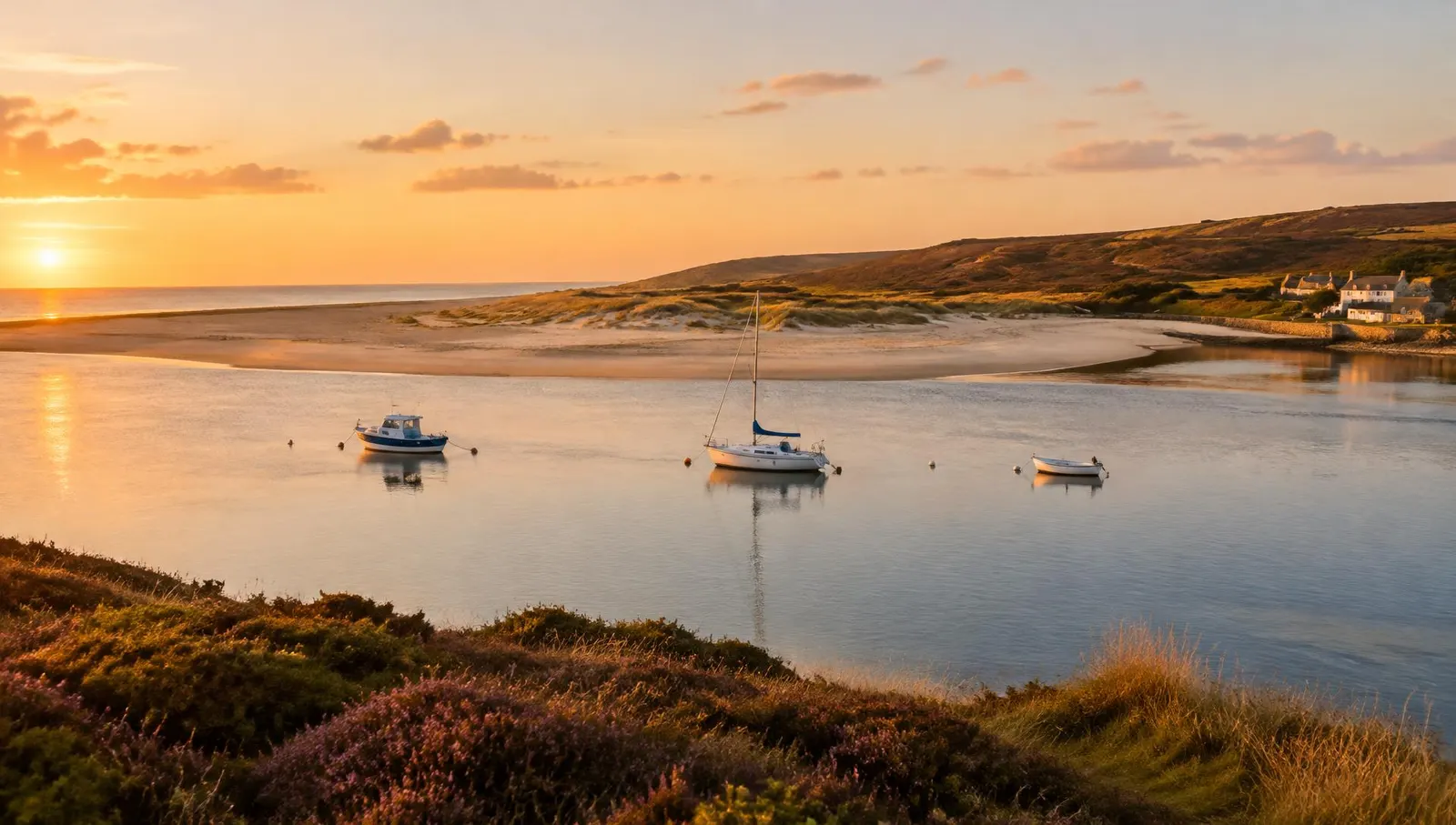
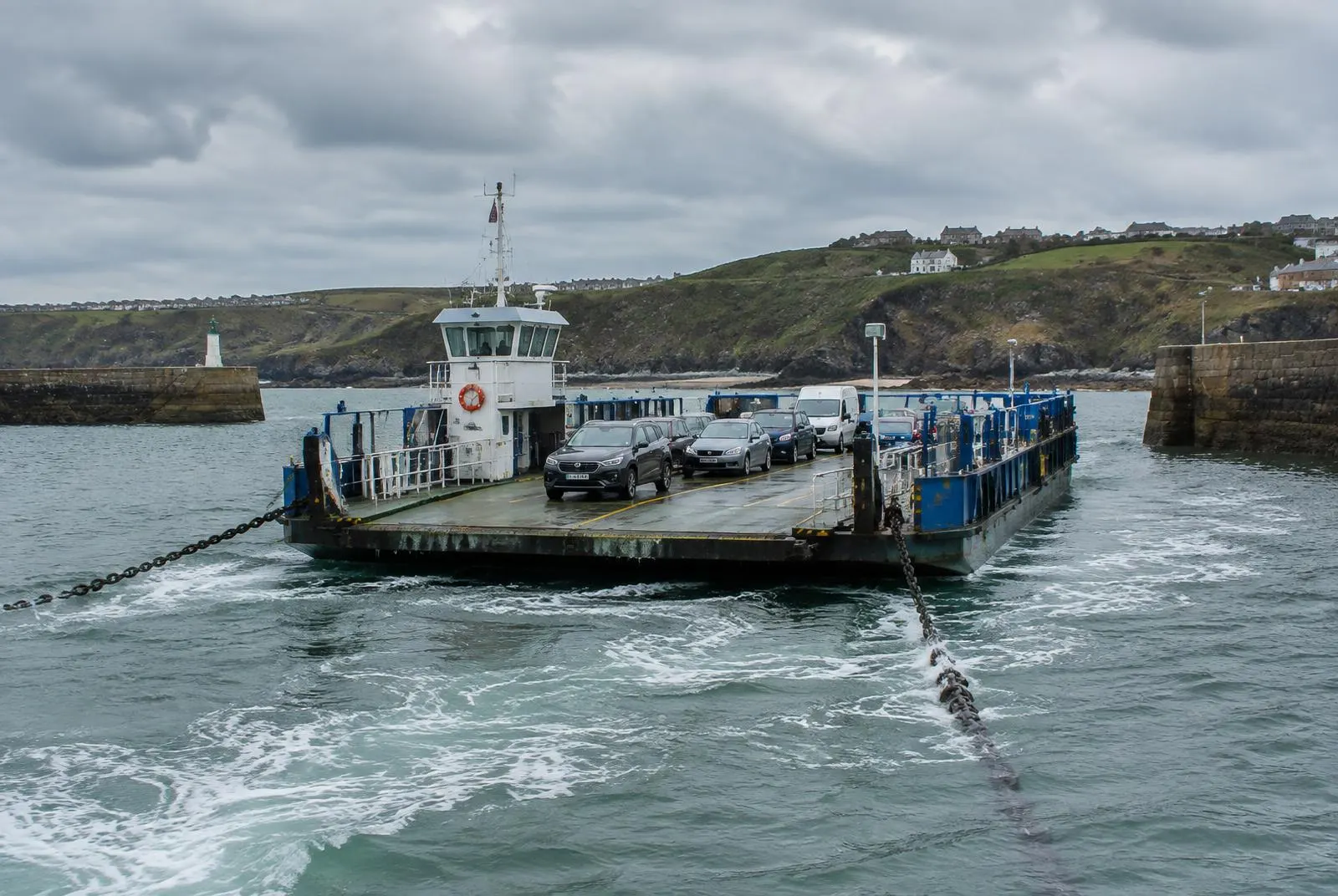
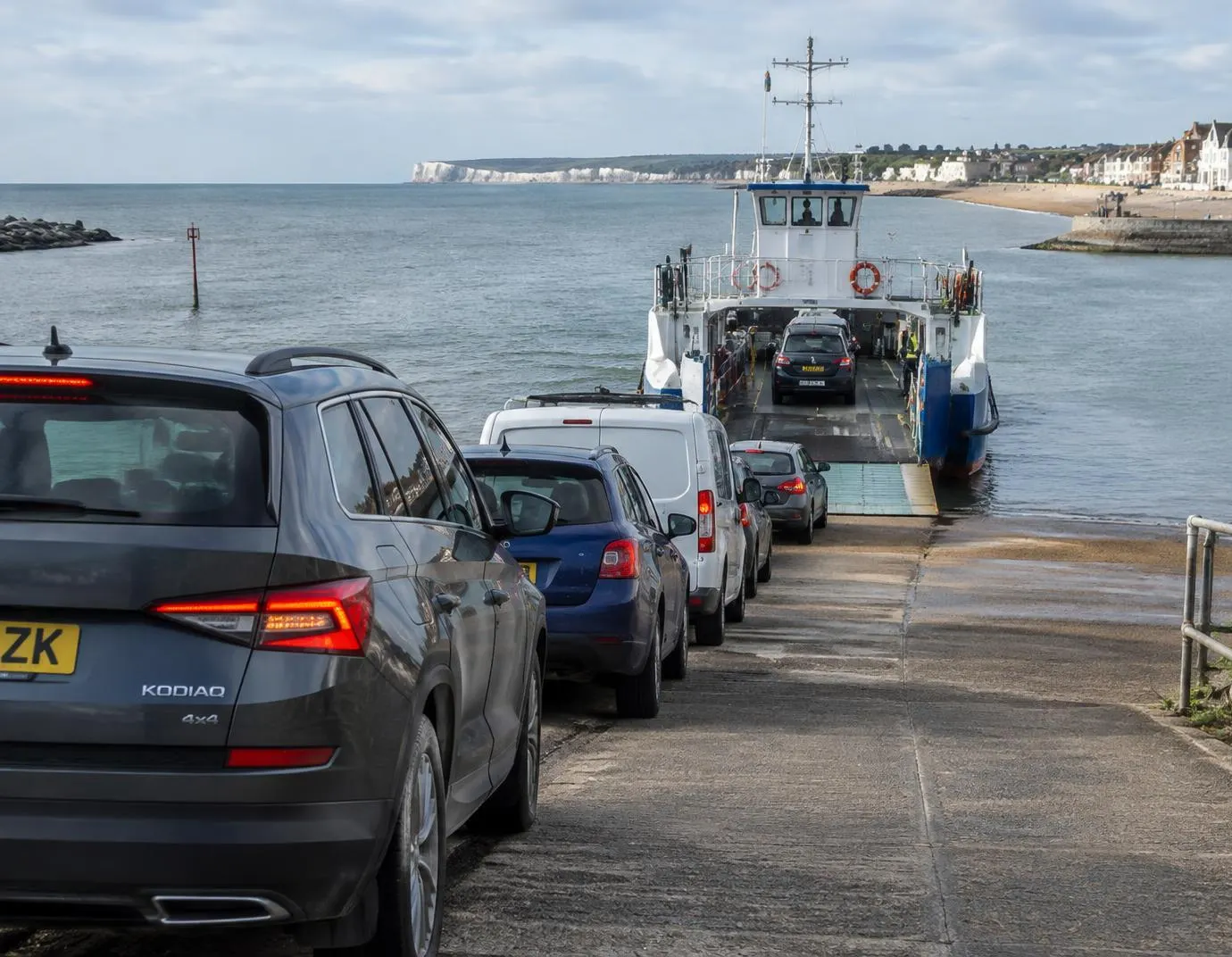
At the mouth of one of the largest natural harbours in Europe, a flat-decked vessel shuttles back and forth on a pair of submerged chains. For many travellers in south-east Dorset, the Sandbanks Ferry is the most direct way between Poole and the Isle of Purbeck.
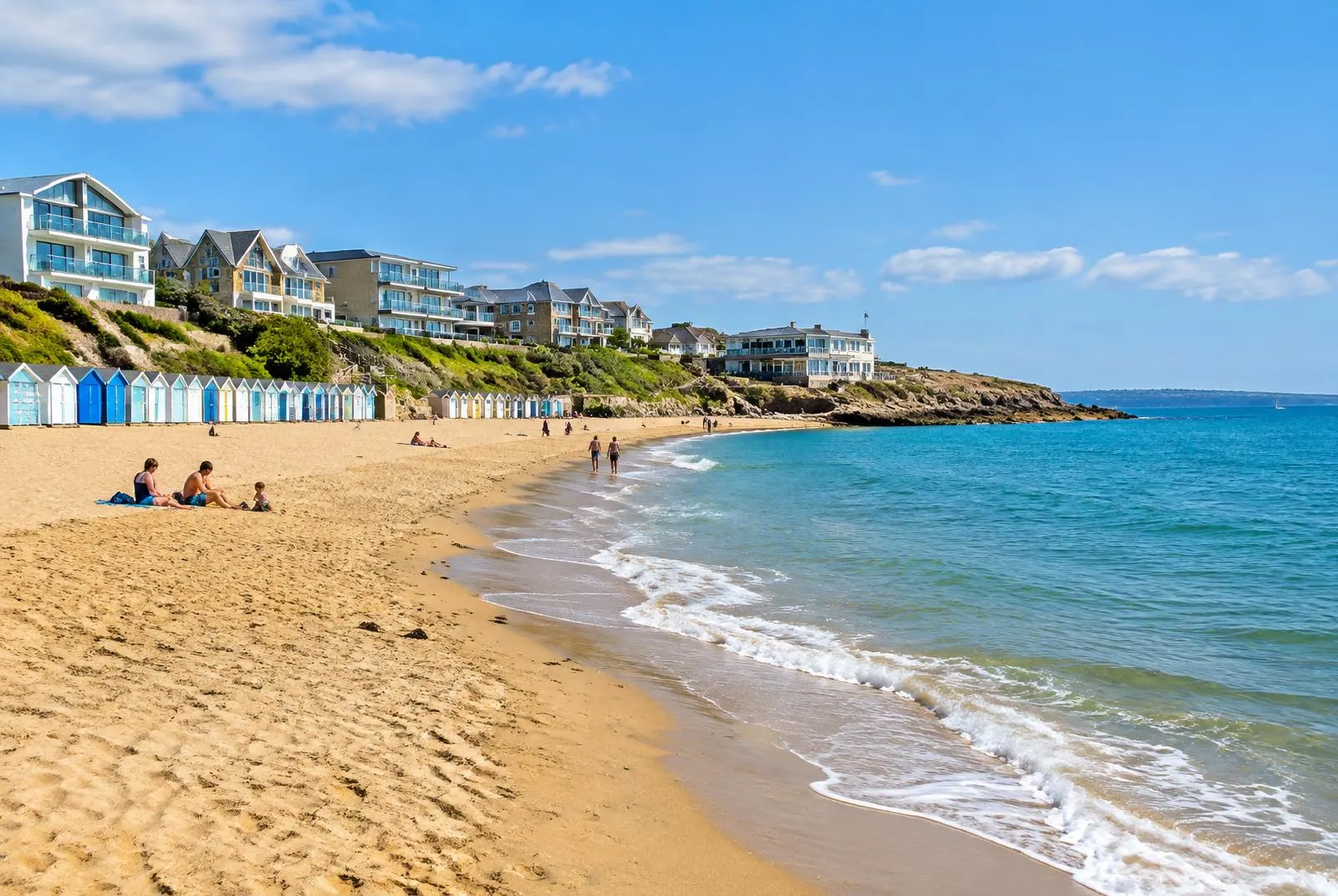
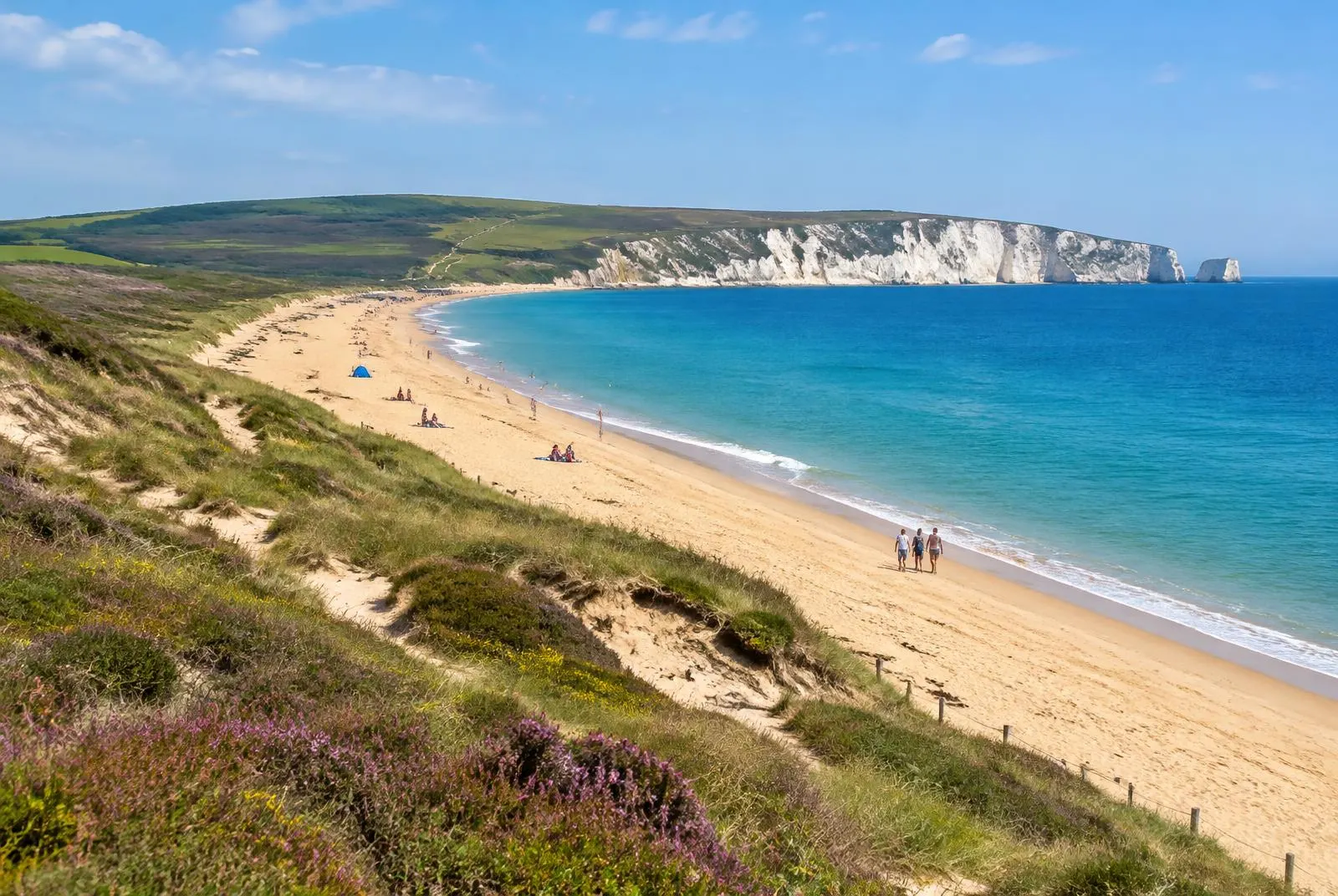
The Sandbanks Ferry operates across the narrow channel that connects Poole Harbour with Poole Bay. On one side lies the Sandbanks peninsula, a slender spit of sand known for its beaches and waterfront homes. On the other is Shell Bay, the northern tip of the Studland peninsula, where heathland, dunes and the road towards Studland, Swanage and Corfe Castle begin.
A ferry service has linked the two shores since the 1920s, when a floating bridge was introduced to replace the long road journey around the harbour through Wareham. Several successive vessels have served the route since then, each built to the same principle but adapted to growing numbers of cars and visitors.
How a chain ferry works
Unlike a conventional ferry, a chain ferry does not steer freely through the water. Two heavy chains are fixed on each shore and laid across the bed of the channel. On board, powered wheels grip the chains and draw the vessel along them, so the ferry follows the same fixed line on every crossing. This makes it well suited to a short, busy channel with strong tidal flows, and it allows the ramps at each end to land precisely on the slipways.
A vital local link
For residents, the Sandbanks chain ferry is an everyday piece of road infrastructure — a way to reach work, schools and shops on the other side of the harbour without a detour of many miles. For visitors, the Sandbanks Ferry crossing is often the start of a day on Studland's beaches or a scenic approach to the Jurassic Coast.
Drivers choose the route because it can save considerable time and fuel compared with travelling round the harbour, while walkers and cyclists use it to join coastal paths and cycle routes. Because the crossing is a toll route, it helps to understand the Sandbanks Ferry toll and payment arrangements before you arrive, and to read our crossing and vehicle guide for practical boarding advice.